
With the proper exposure and lighting, a photograph can reveal interesting details
This month we are highlighting “close up” photography, also referred to as “macro” photography. This is my favorite type of photography when it comes to shooting underwater. I enjoy this because as a diver you often can’t get a close look at something for very long (many creatures swim away or retreat into the reef). However, if you can get a macro photo, you can look back at the creature for as long as you want, studying details that are not afforded to you while you are diving. With the proper exposure and lighting, a photograph can reveal interesting details you otherwise couldn’t see. For example, if you look at the eye of this bandtail searobin it looks like a James Webb Space Telescope image.
Bandtail searobins live on the bottom. They have three unconnected spines on their pectoral fins that they use like fingers to help them walk around the seafloor. If you look directly below the eye in this photo you will see these. If you look closely, you will see the bandtail searobin has two long cirri on its tapered snout. What are cirri? These are soft appendages generally on the head of some fish that are used for sensing and camouflage.

Bandtail searobins generally grow to around eight inches, which is about the size of the one in this photograph. They can grow to a maximum of about a foot in length. As their name suggests, they have distinct vertical bars on their tail. This pattern looks similar to the pectoral fins seen on the left side of this photograph.
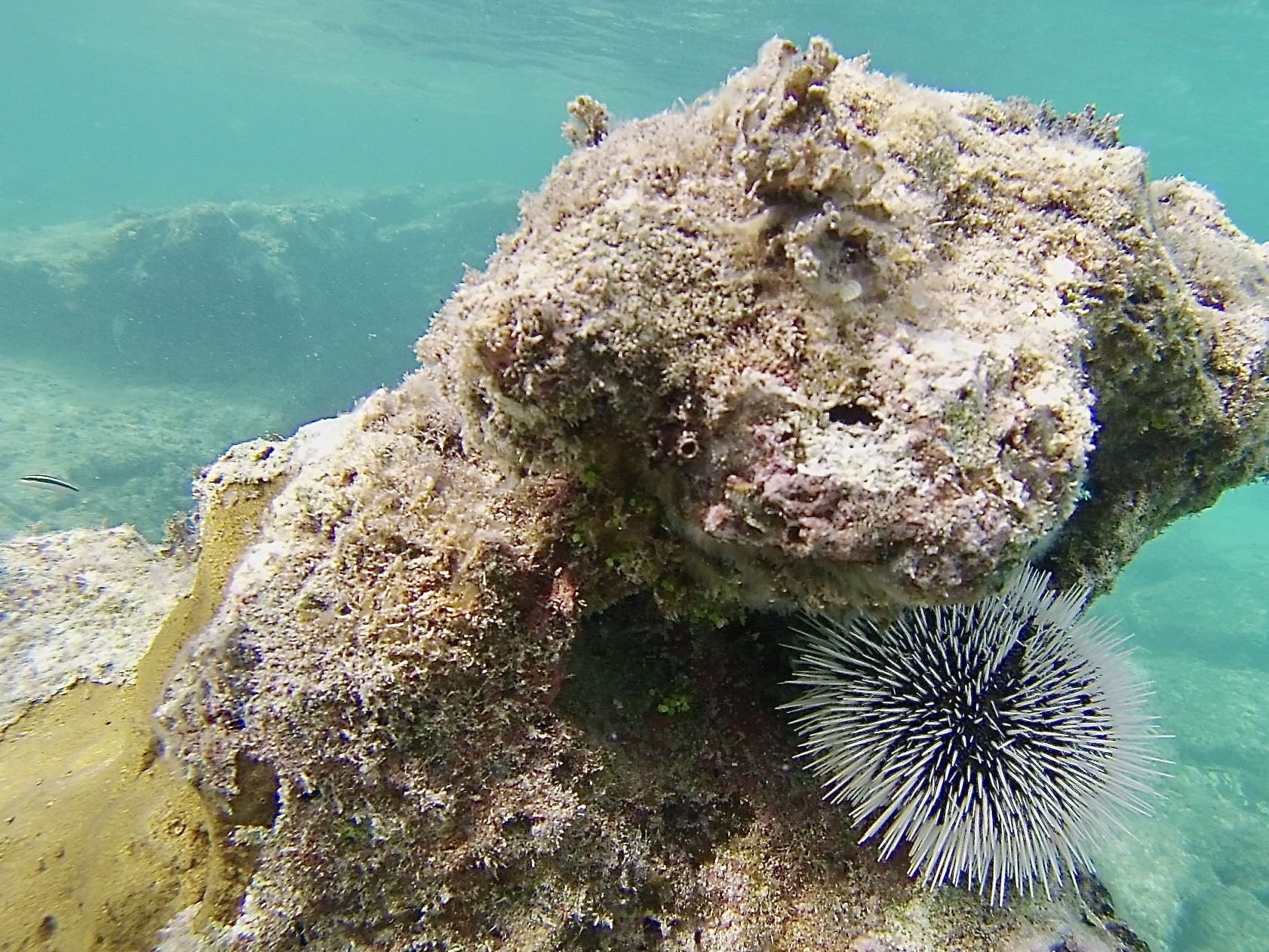
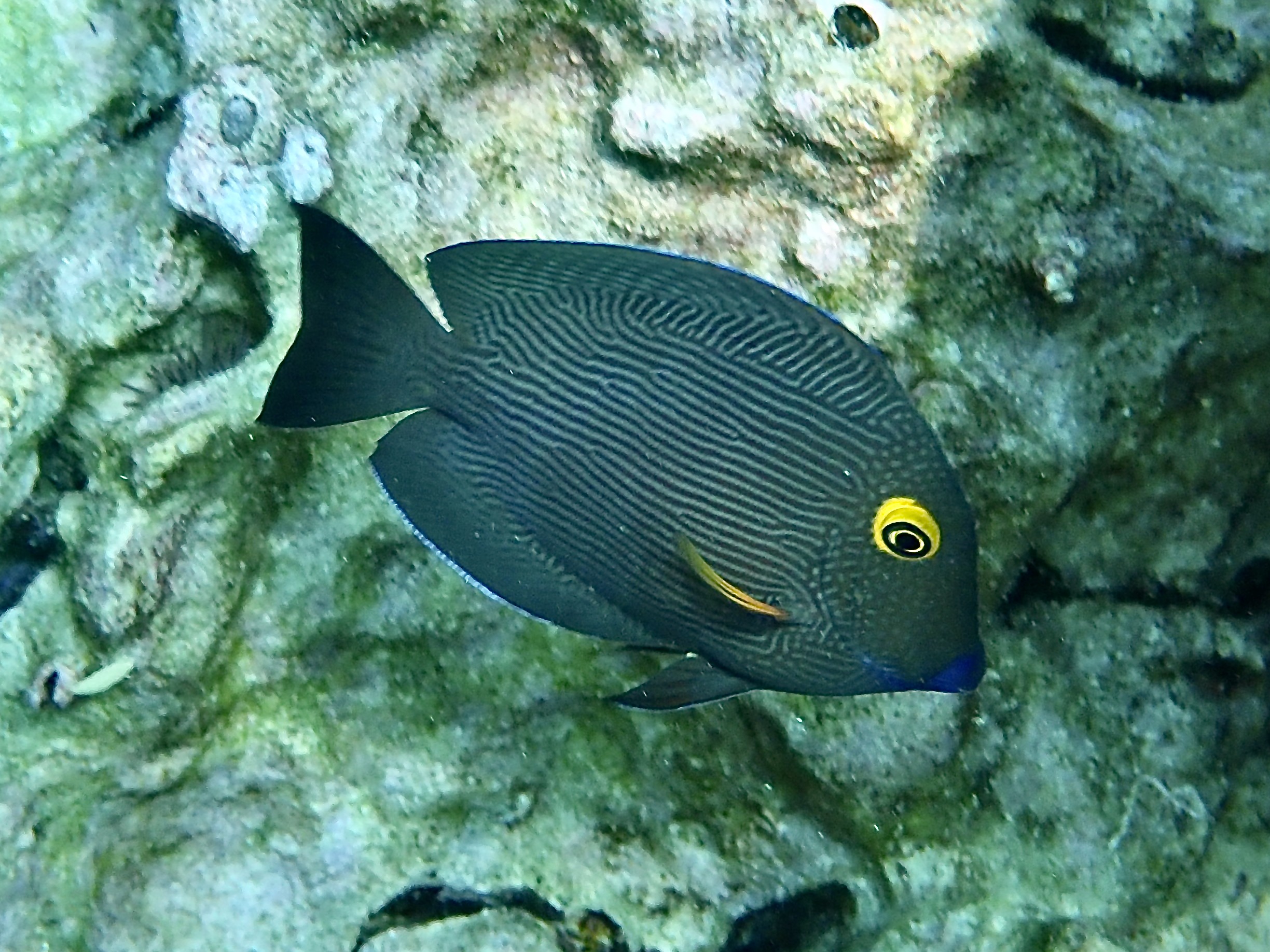
These fish are considered uncommon in Florida, but relatively common in the area of Florida I took this photograph. This photograph was taken at Blue Heron Bridge near West Palm Beach. Wild Boyz Photography has written extensively about this famous dive site. It is one of our favorites. I’ve inserted some other interesting Blue Heron Bridge photographs throughout this article. Bandtail searobins can be found throughout the Bahamas and Caribbean, as well as the Gulf of Mexico. They have been seen along the east coast of Florida north to North Carolina.
As you can see in this photograph, these fish are masters of camouflage. They can also remain perfectly still, so it is easy to swim right next to them without seeing them. Bandtail searobins tend to be wary of divers. I was able to get this close up image by getting close to the seafloor and approaching very slowly.
This photograph was taken at Blue Heron Bridge near West Palm Beach
Did you know?
- When spooked, bandtail searobins will open their pectoral fins like wings and swim away.
- Bandtail searobins are found in very shallow waters, generally less than 40 feet deep.
- There are at least 24 species of searobins in the Caribbean alone.




0 Comments